
MIT · DPG
IndiaFOSS 2026 · Main track · 30 minutes
From Pull
Requests
to Patients
Building open healthcare infrastructure in the open. The story of CARE and Open Healthcare Network.
Bodhish Thomas · CEO, Open Healthcare Network Foundation · Creator of CARE · GitHub Star
Why healthcare
Healthcare is where open source stops being ideology and starts becoming accountability.
A bug
is never just a bug.
A failed deploy
is never just downtime.
A night shift
does not wait for a hotfix.
From Pull Requests to Patients · IndiaFOSS 2026
01 / 32
The distance
Six steps separate a pull request from a patient.
01
Pull request
Merged by a maintainer
02
Release
Staged, noted, reversible
03
Deployment
On a server the state owns
04
Training
Fourteen districts, one team
05
Workflow
Shifts, referrals, corrections
06
Patient
A home visit recorded
Code is the first step. This talk is about the other five, and what it costs to run them.
From Pull Requests to Patients · IndiaFOSS 2026
02 / 32
01
Proof
From a COVID war room in 2020 to a Digital Public Good running in eleven states.
March 2020
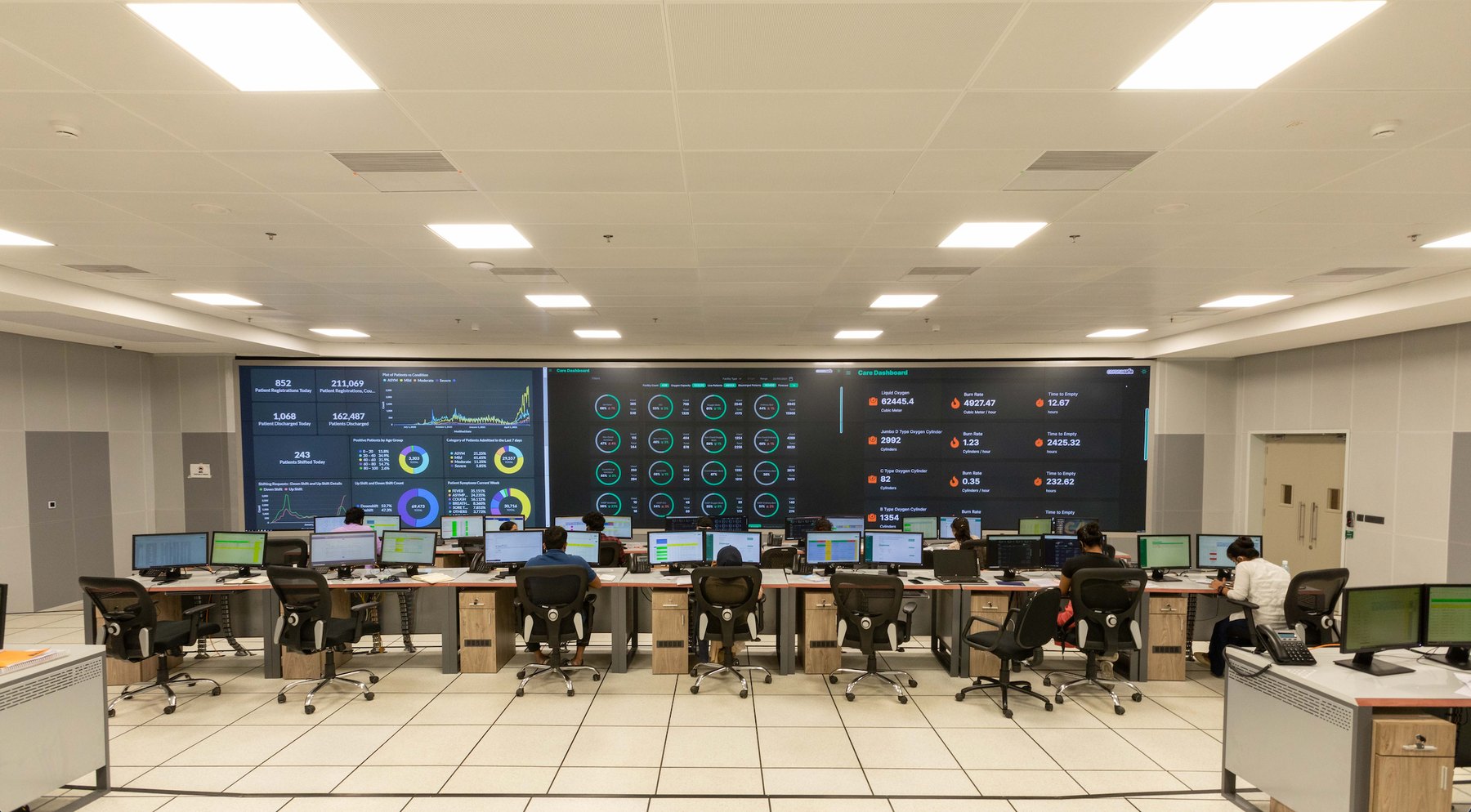
CARE started in a COVID war room.
A volunteer project for real-time capacity monitoring and care coordination in Ernakulam, run with the district administration through three pandemic waves.
465+
Hospitals onboarded
355K+
Patients managed
200K+
Telemedicine calls
35×
Patient surge in 40 days
From Pull Requests to Patients · IndiaFOSS 2026
03 / 32
Six years
From crisis response to public infrastructure.
2020
COVID war rooms in Ernakulam, built by volunteers, run through three waves.
2021
TeleICU for 10BedICU: district ICUs connected to specialist hubs.
2023
Recognised as a UN Digital Public Good.
Apr 2025
Kerala Care: the state-wide palliative and home care grid goes live on CARE Core.
Dec 2025
Open Healthcare Network Foundation incorporated as the steward.
Jan 2026
CARE HMIS runs a full hospital; Kerala Care goes paperless.
One repository, one MIT licence and one community, through every turn.
From Pull Requests to Patients · IndiaFOSS 2026
04 / 32
Across India
One open core now runs in eleven states.
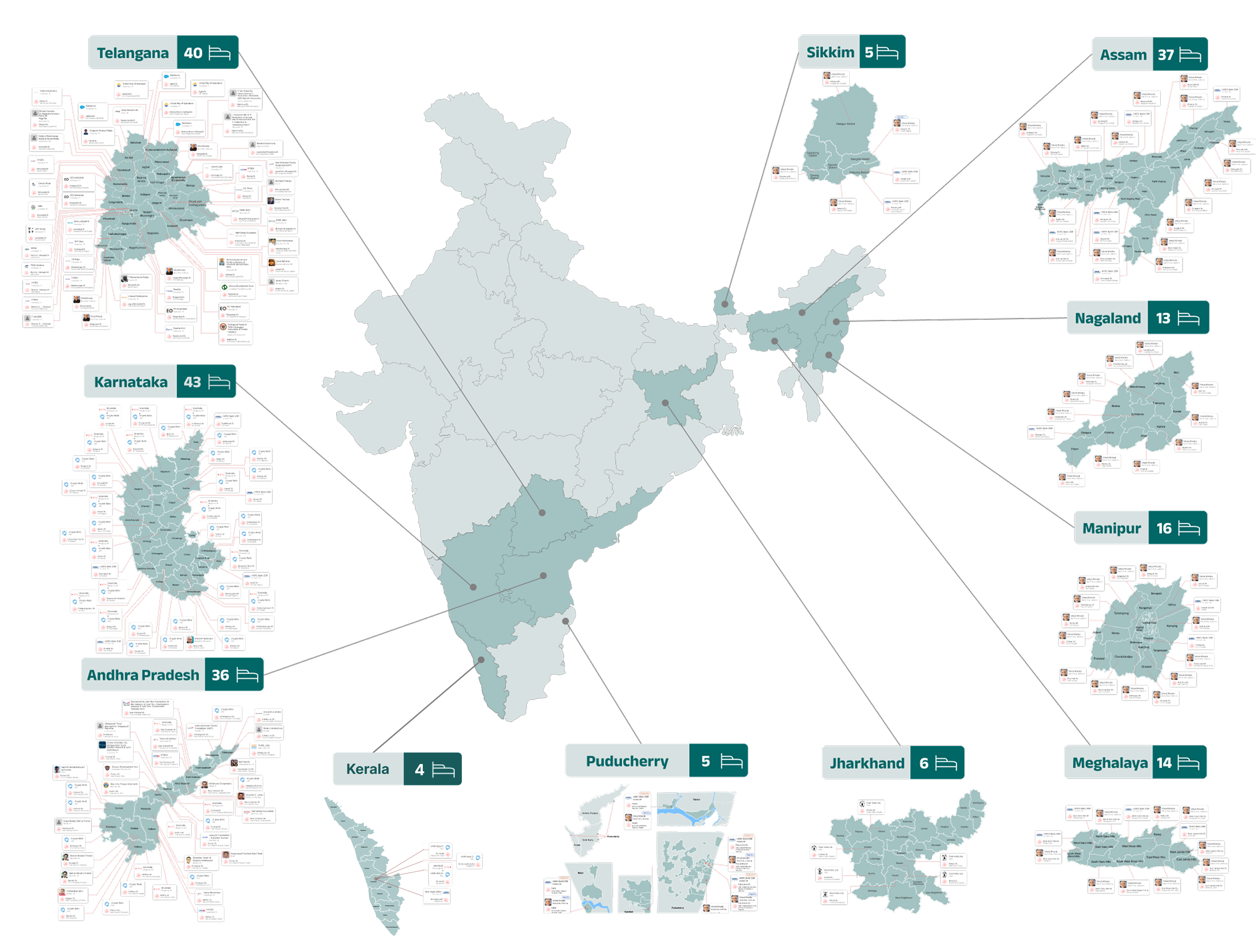
11
States have deployed CARE
216
ICUs across 15 TeleICU hubs
100+
Hospitals live on CARE HMIS
160M
People covered across 7 states
UN Digital Public Good
MIT licensed
FHIR R5
1,379+ contributors
From Pull Requests to Patients · IndiaFOSS 2026
05 / 32
Kerala Care · a Government of Kerala initiative
Kerala's palliative care grid runs on CARE.

Launched by the Chief Minister in March 2025, handed over to NHM Kerala, run by the state.
1,412+
Government facilities
1,305+
NGOs in the network
374K+
Home-bound patients
1.9M+
Home-care consultations
12,000+
Government staff as users
100%
Paperless since Jan 2026
Home visits, facilities, volunteers and care homes on one register. Public dashboard: dashboard.care.kerala.gov.in
From Pull Requests to Patients · IndiaFOSS 2026
06 / 32
TeleICU and 10BedICU
TeleICU takes specialists to district ICUs.
Specialist hub
Medical college
District ICU
District ICU
District ICU
District ICU
District ICU
District ICU
A ten-bed ICU in a district hospital, backed by intensivists at a medical-college hub.
216
ICUs connected
15
TeleICU hubs
7
States
CARE carries vitals, notes and rounds on one shared record, so the specialist sees what the bedside team sees.
From Pull Requests to Patients · IndiaFOSS 2026
07 / 32
CARE HMIS
CARE HMIS runs whole hospitals.
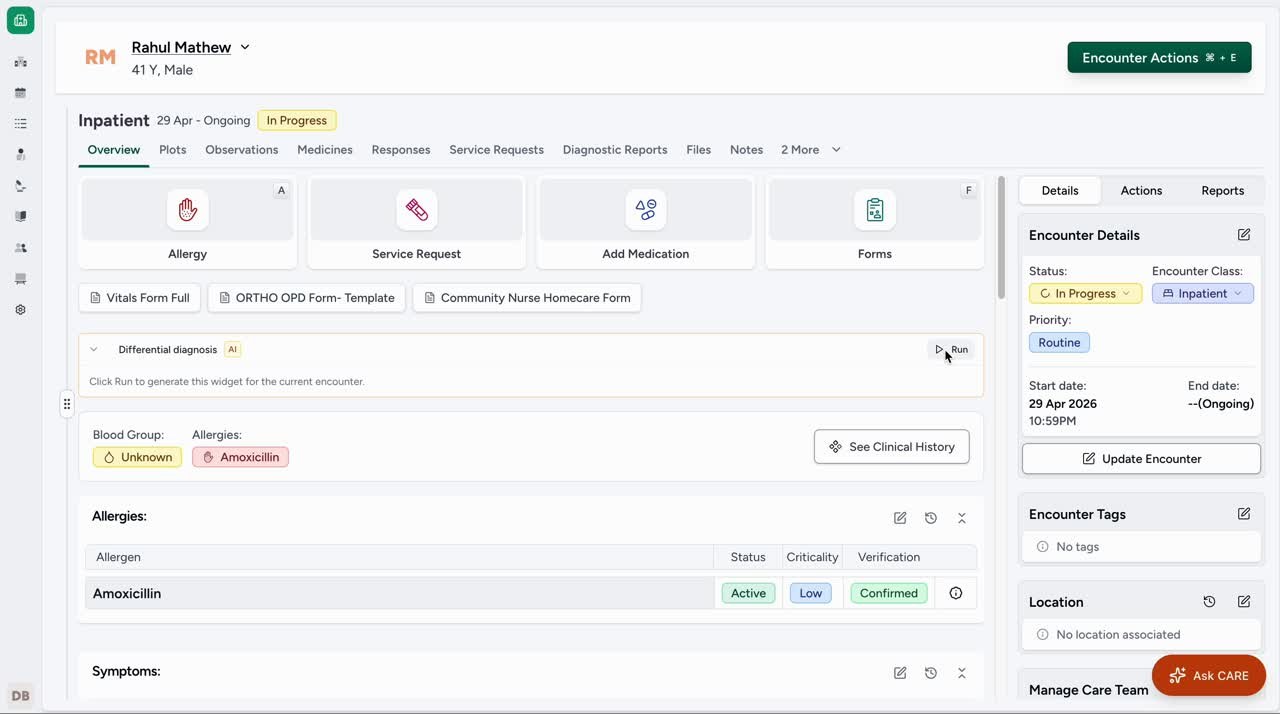
100+
Hospitals live on CARE HMIS
5
States: Kerala, Karnataka, Jharkhand, Assam, Manipur
20→90%
Inpatient nursing documentation on the system, before and after the Kochi go-live
From Pull Requests to Patients · IndiaFOSS 2026
08 / 32
Kerala Care · December 2025
1,000,000
encounters recorded in one state programme.
Crossing one million encounters changes the engineering bar. Billing validation, print quality, queue behaviour, dashboard permissions and data extraction stop being polish. They become the difference between a system that records activity and a system that can be governed.
From Pull Requests to Patients · IndiaFOSS 2026
09 / 32
Take home · 1 of 5
Open source becomes infrastructure the day a government can run it without you.
02
Inside CARE Core
The product, in depth: one kernel for healthcare workflows, and why it survives every new programme.
Architecture
CARE Core is a kernel for healthcare workflows.
Surfaces
Web app · React, TypeScript
Mobile-first PWA
care_desktop
Plugin micro-frontends
API
CARE API · Django REST
Celery workers
Open, FHIR-aligned APIs
Core domains
Clinical
Operational
Administrative
Definitions
Cross-cutting
Organisation hierarchy
RBAC and audit
Terminology server
Plugin surfaces
Persistence
PostgreSQL
Redis
Object storage
Standards
FHIR R5
SNOMED CT
LOINC
UCUM
ICD-10
ABDM
CARE Core v3.0. Everything above the core row is replaceable; everything below it is shared by every deployment.
From Pull Requests to Patients · IndiaFOSS 2026
10 / 32
Domains
Sixty-three FHIR-aligned resources, in three domains.
63
resources modelled on FHIR R5, one data model for every programme
Clinical
Patients
Providers
Encounters
Observations
Diagnostic reports
Care plans
Questionnaires
Conditions
Allergies
Operational
Appointments
Slots and schedules
Service requests
Medication requests
Specimens
Tasks
Care teams
Beds and locations
Administrative
Facilities
Organisations
Users and roles
Accounts
Charge items
Invoices
Payments
Inventory
Coverage and claims
From Pull Requests to Patients · IndiaFOSS 2026
11 / 32
Forms
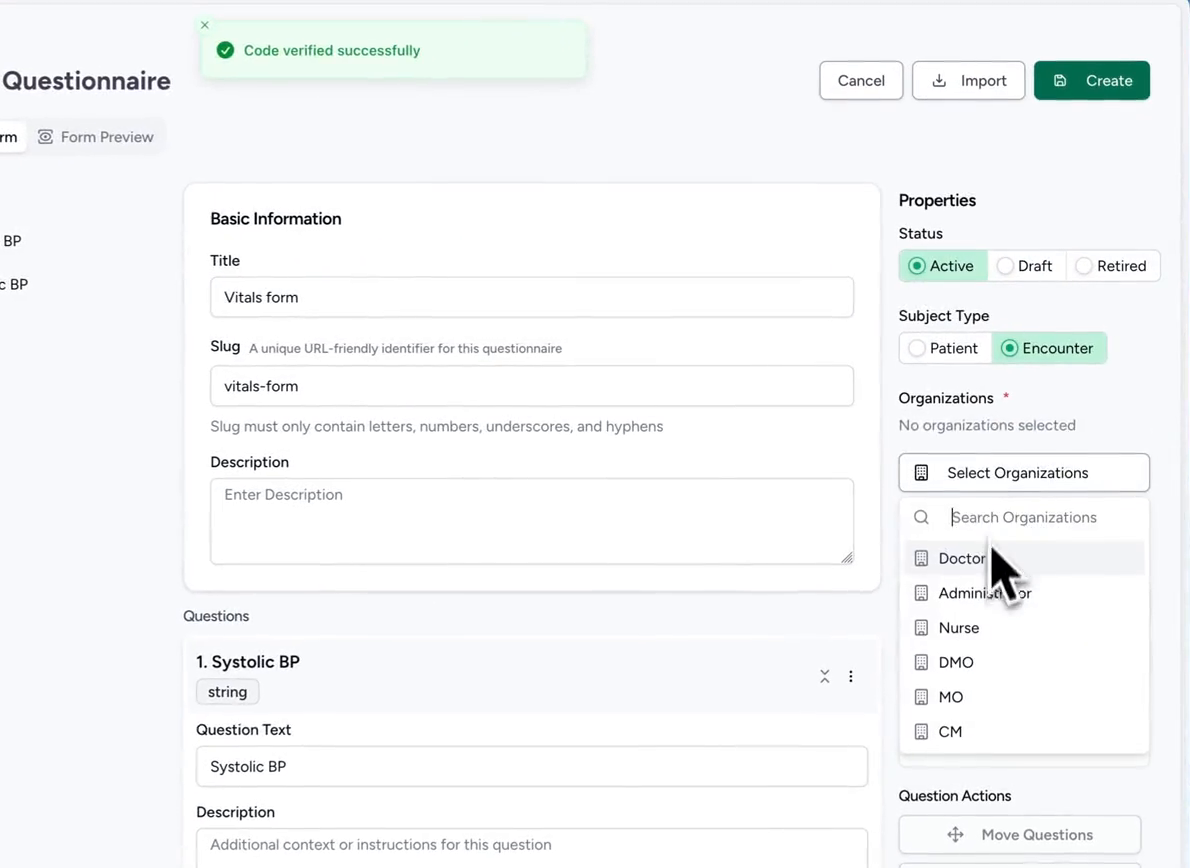
Forms are data, not code.
01
Questionnaire
Built by the programme team in the form builder. No release.
02
Structured answers
Typed values, codes and UCUM quantities, never free text.
03
Coded observations
Bound to SNOMED CT, LOINC and ICD-10 by the terminology server.
04
Registers, dashboards, AI
Registers, dashboards and AI features read the same rows.
A nurse's home-visit form and an ICU chart are the same engine. FHIRPath computed fields make forms context-aware without a developer.
From Pull Requests to Patients · IndiaFOSS 2026
12 / 32
Plugins · Plugs V3
A programme is configuration plus a plugin, never a fork.
Deployments
Kerala Care
10BedICU TeleICU
Sree Sudheendra
Pallium India
Niram
Arike
Care Clinics
Integrations
ABDM M1, M2, M3
Claims and coverage
Payments
Messaging: SMS, email
National ID
Clinical plugins
Care Scribe
TeleICU · ONVIF cameras
Vitals monitors
Imaging · DICOM, PACS
Lab devices
Replaceable surfaces
Dashboards and reports
Print formats
Forms and fields
Clinical drawings
Barcode and QR
CARE Core
Plugs V3 (May 2026): hot reload, environment-based configuration, and any application surface replaceable by a plugin. One codebase, no forks per hospital.
From Pull Requests to Patients · IndiaFOSS 2026
13 / 32
Standards
Standards are the exit door, and that is why deployers trust us.
Connects
Hospitals · Public-health programmes · ABDM · Devices
A FHIR-native architecture turns one state's deployment into infrastructure the next state, hospital or country can reuse.
CARE Core
FHIR R5
SNOMED CT
LOINC
UCUM
ICD-10
ABDM-ready
Terminology server
RBAC + audit
Feeds
Analytics · Public health · Research · AI models
Every CARE deployment produces structured, coded, longitudinal records a deployer can take with them.
Bring your own terminology: the terminology server binds local vocabularies to SNOMED and LOINC, so Malayalam field terms still code cleanly.
From Pull Requests to Patients · IndiaFOSS 2026
14 / 32
Tenancy and governance
One deployment holds a whole state.
State
NHM Kerala
14 districts
DMO, coordinators
LSGs
Panchayat, municipality, corporation
1,412 facilities
and 1,305 NGOs
Home-care teams
12,000+ users
Roles follow the hierarchy
A district officer sees the district; a nurse sees her patients. Permissions are positions in the tree, not a list per user.
Every action is audited
Who saw and changed what, and when, for every record. A regulator can verify without asking us.
Dashboards per level
Ward, facility, district and state each get the view they are allowed. Registers download where the statute needs them.
From Pull Requests to Patients · IndiaFOSS 2026
15 / 32
Deployment
Self-hostable, and cheaper than the building it runs in.
Runs where the data must live
On-premise, state cloud, VPC or hybrid; cloud-agnostic.
Leave with everything
Open code, data model, APIs and coded records. No exit fee.
MIT licensed
No licence negotiation for governments, NGOs or vendors.
A state-scale deployment, estimated
20,000
daily active users
50,000
encounters a day
≈$8K
a month of cloud, before discounts
Engineering estimate, July 2026, single deployment, excluding DR and SMS.
From Pull Requests to Patients · IndiaFOSS 2026
16 / 32
The core on the floor
The same core runs the ward, the lab and the counter.
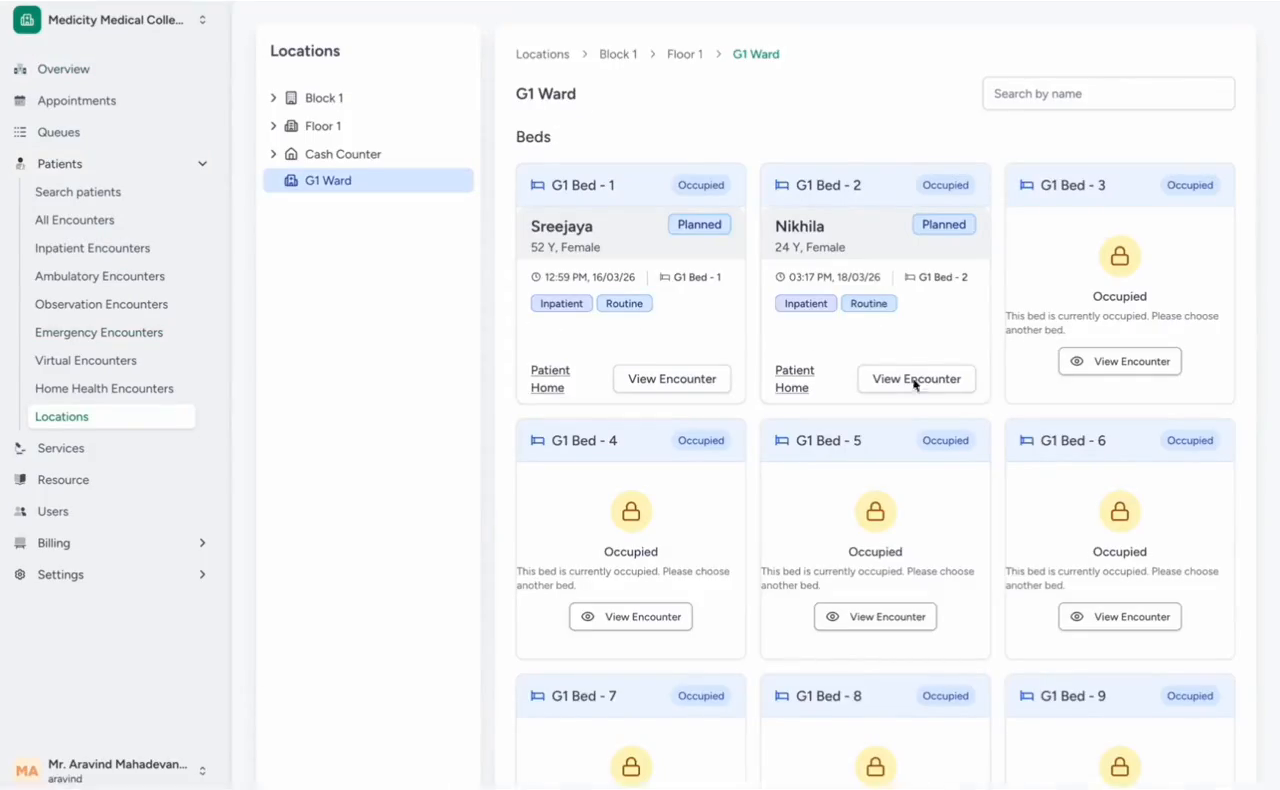
Beds and wards
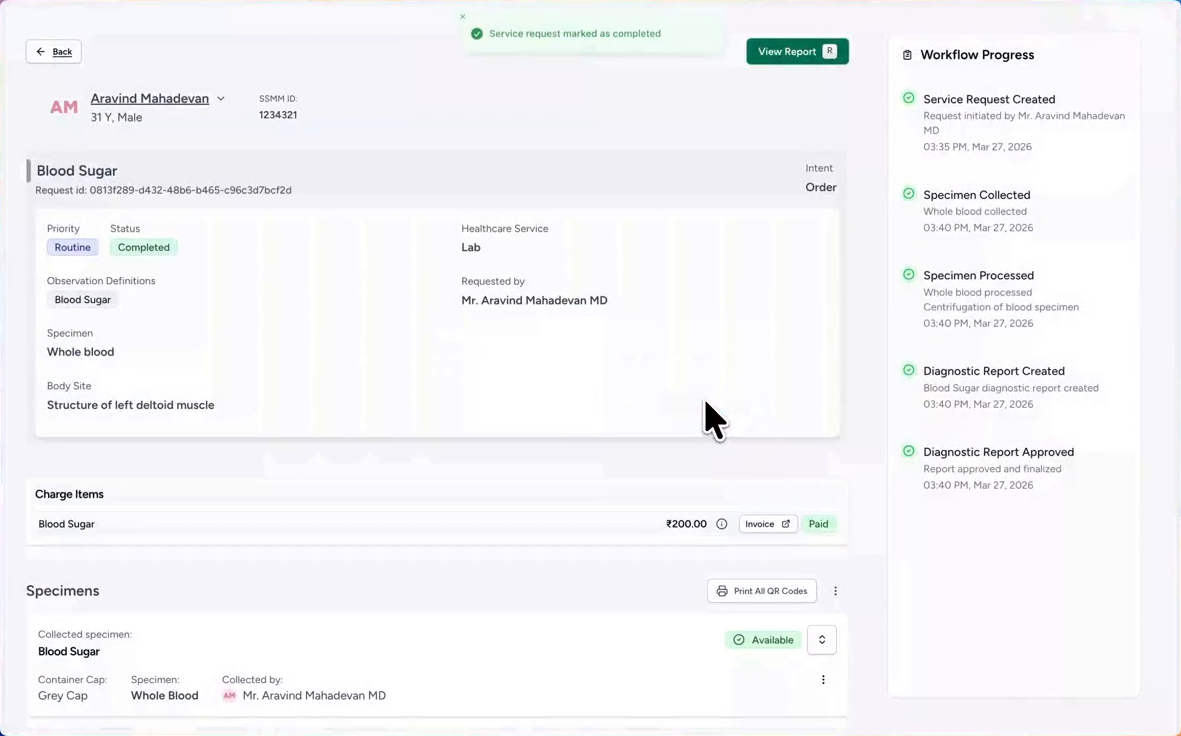
Labs and diagnostics
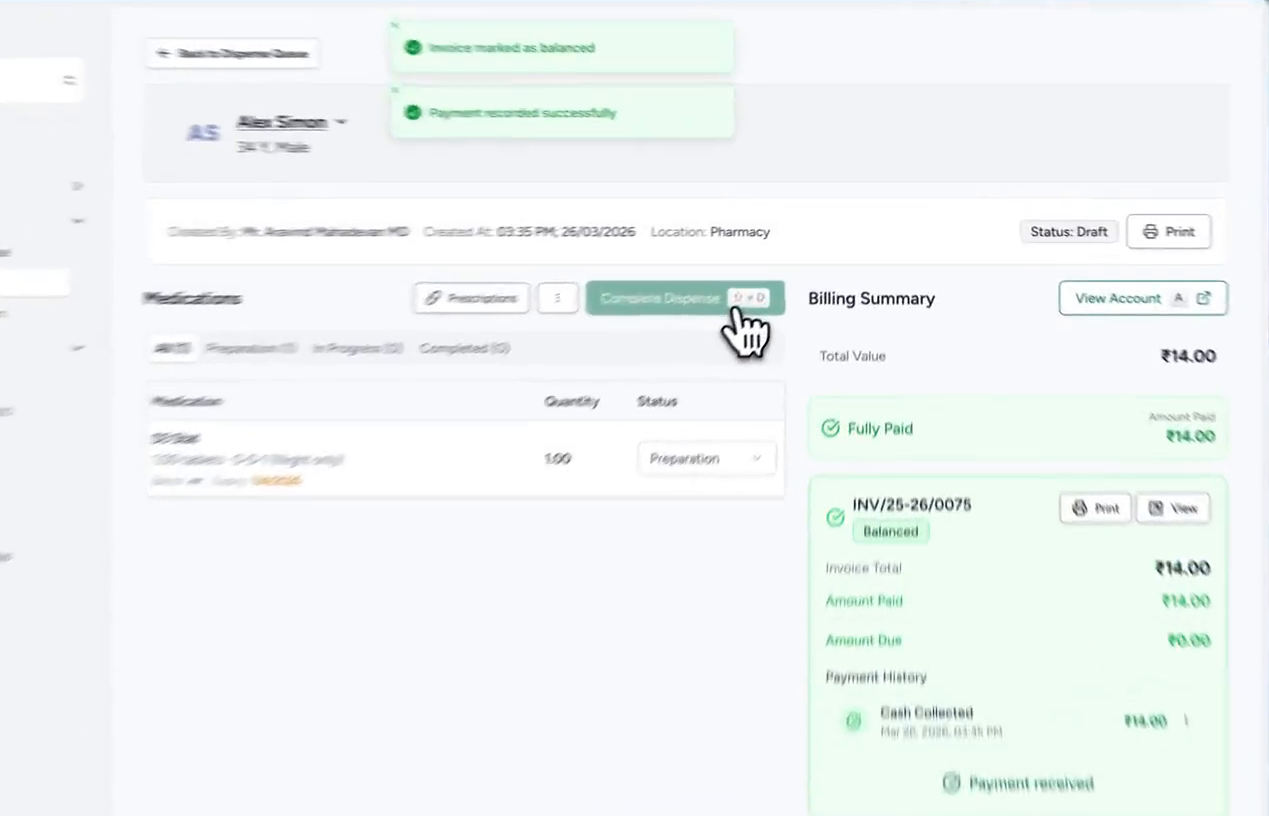
Pharmacy
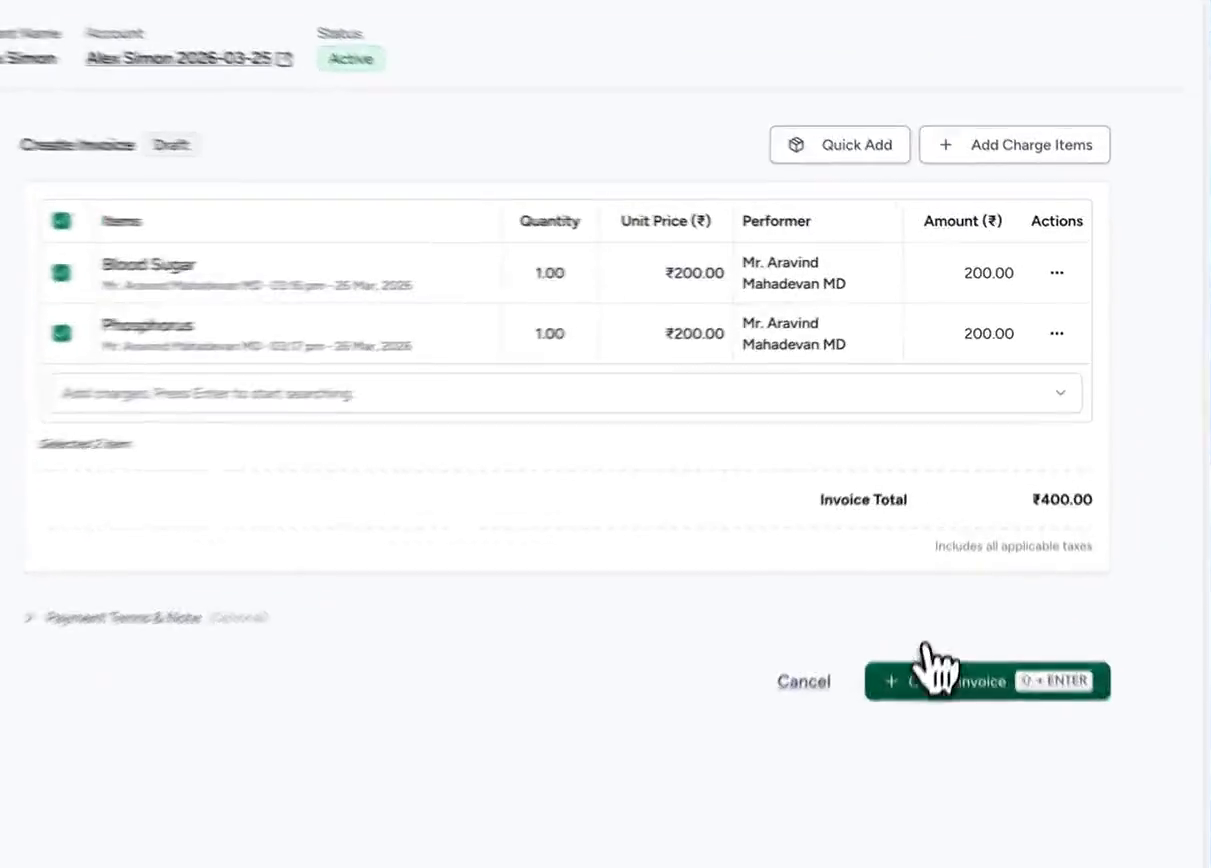
Billing and accounts
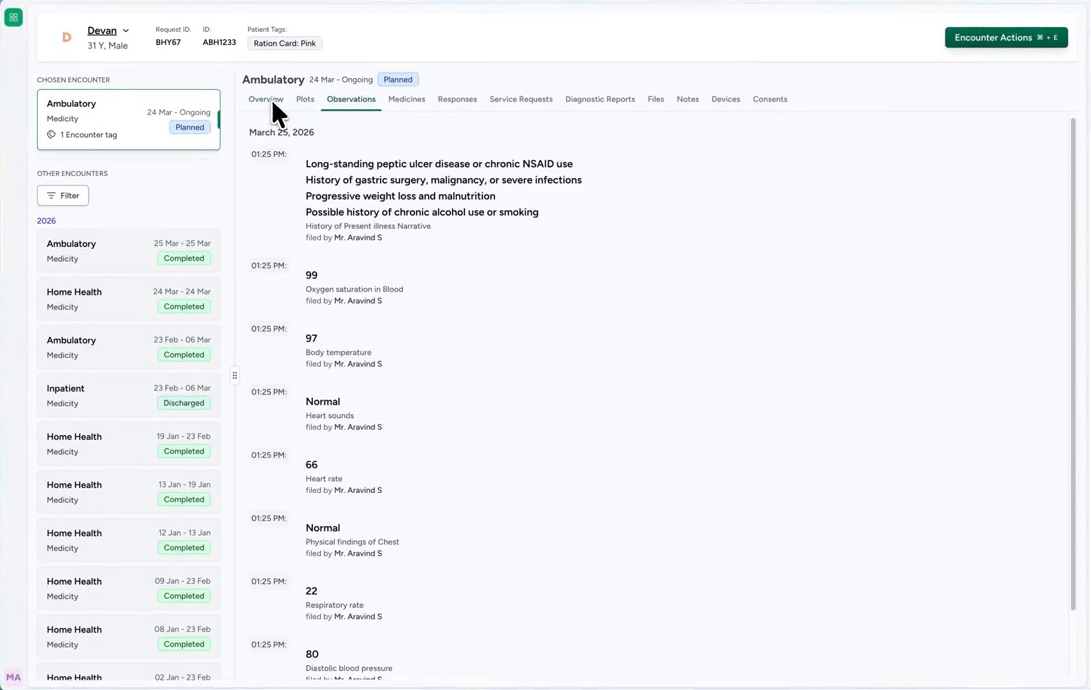
Encounters and observations
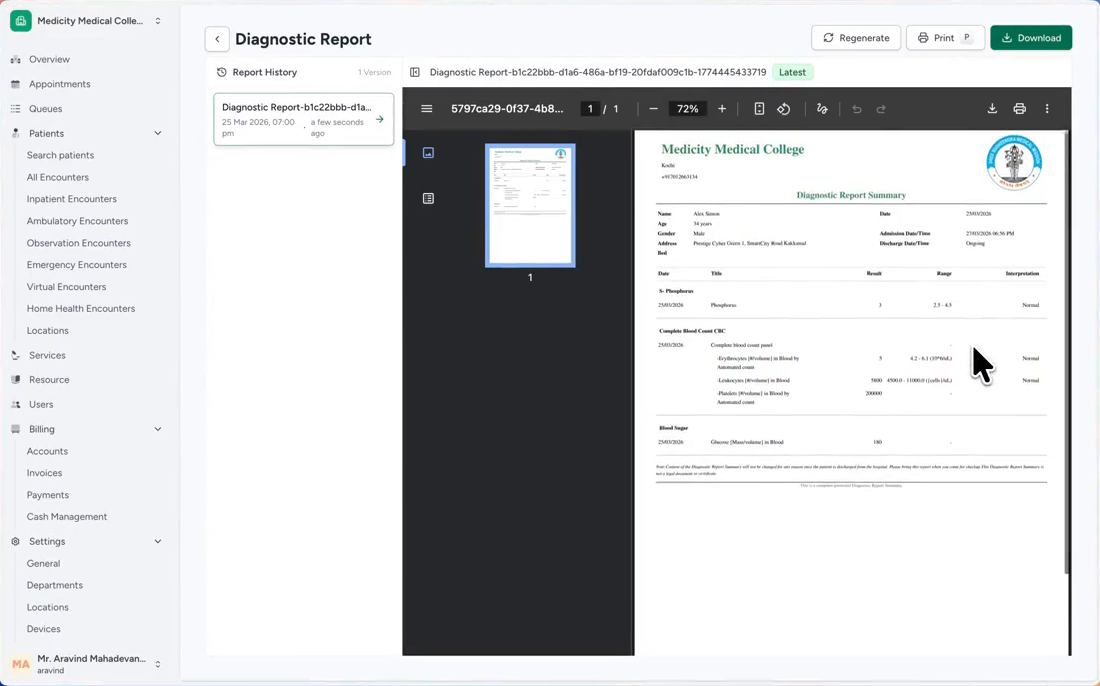
Reports and registers
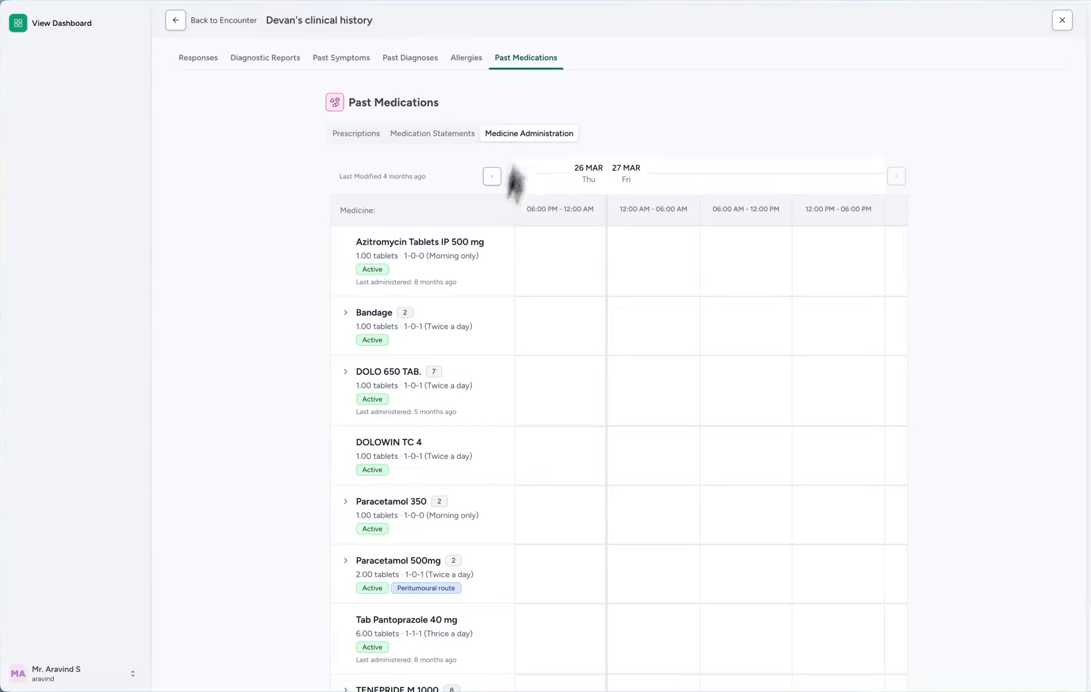
Medication administration
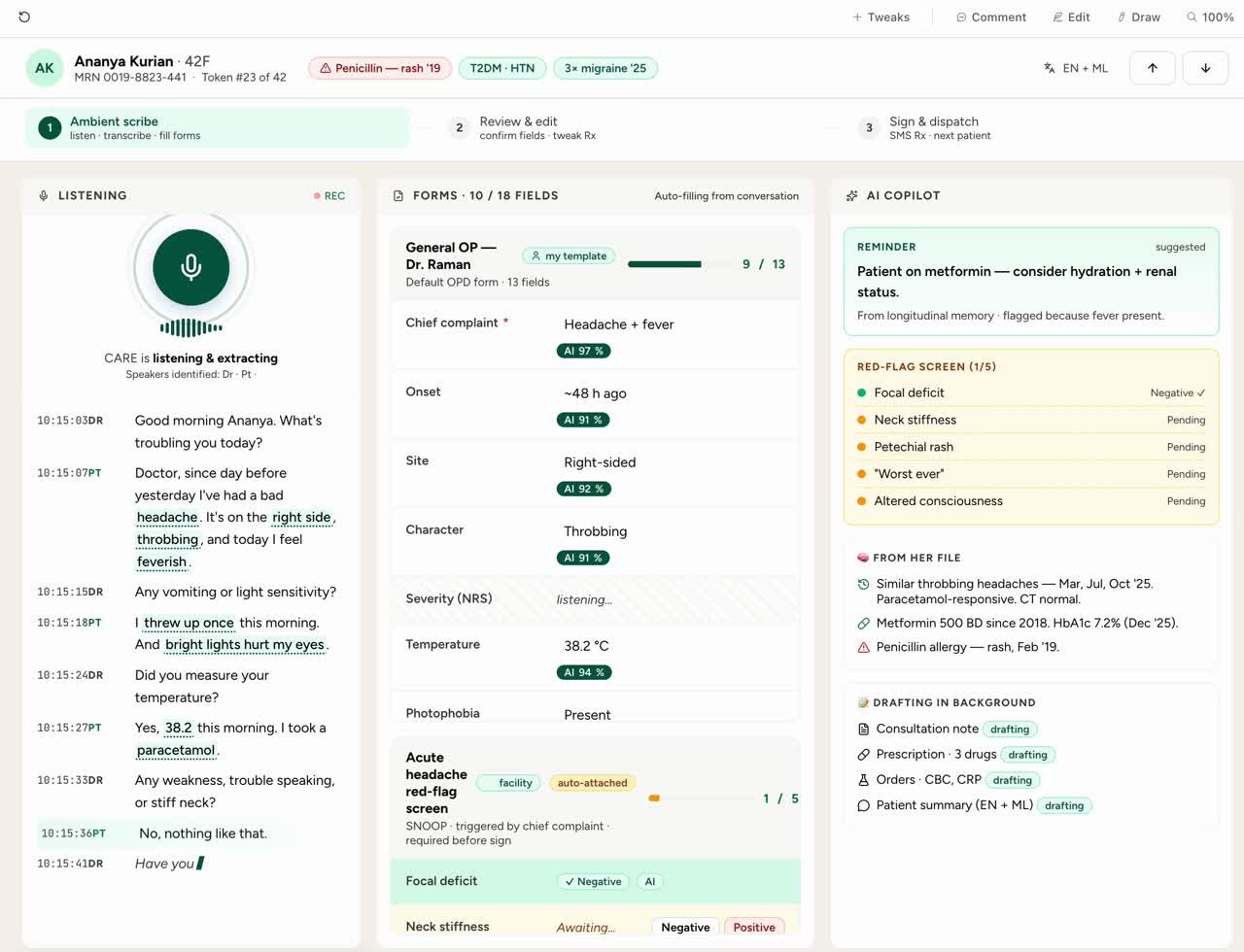
Care Scribe
From Pull Requests to Patients · IndiaFOSS 2026
17 / 32
AI on the core
AI is safe here because the data layer was structured first.
Voice
Ambient clinical documentation
Malayalam and English consultations become structured encounters.
Vision
Clinical document intelligence
Lab reports and clinical documents become structured observations.
Language
Clinical summarisation
Longitudinal records become discharge summaries, handovers and care plans.
AI drafts. Humans decide. CARE records.
From Pull Requests to Patients · IndiaFOSS 2026
18 / 32
Take home · 2 of 5
Build primitives, not features. A programme is configuration plus a plugin.
03
The systems behind the product
Community, onboarding, review, releases, security and governance: the unglamorous parts that governments check first.
The systems behind the product
Seven systems keep high-stakes FOSS alive.
Contributor onboarding
A path from first issue to merged pull request.
Review culture
Every change read by someone who knows what it touches.
Documentation
Written for deployers and clinicians as well as developers.
Release discipline
Predictable releases, staged before production.
Governance
Clear rules on who decides what, and who can say no.
Security expectations
Health data sets the bar for every contributor.
Community ownership
The project outlives any one team.
Each one has an owner, a roadmap and a budget line.
From Pull Requests to Patients · IndiaFOSS 2026
19 / 32
Onboarding
From first issue to maintainer, by design.
01
Learn
A free course at school.ohc.network.
02
First issue
A scoped issue a newcomer can finish.
03
Mentored PR
Reviewed by someone who knows the workflow it touches.
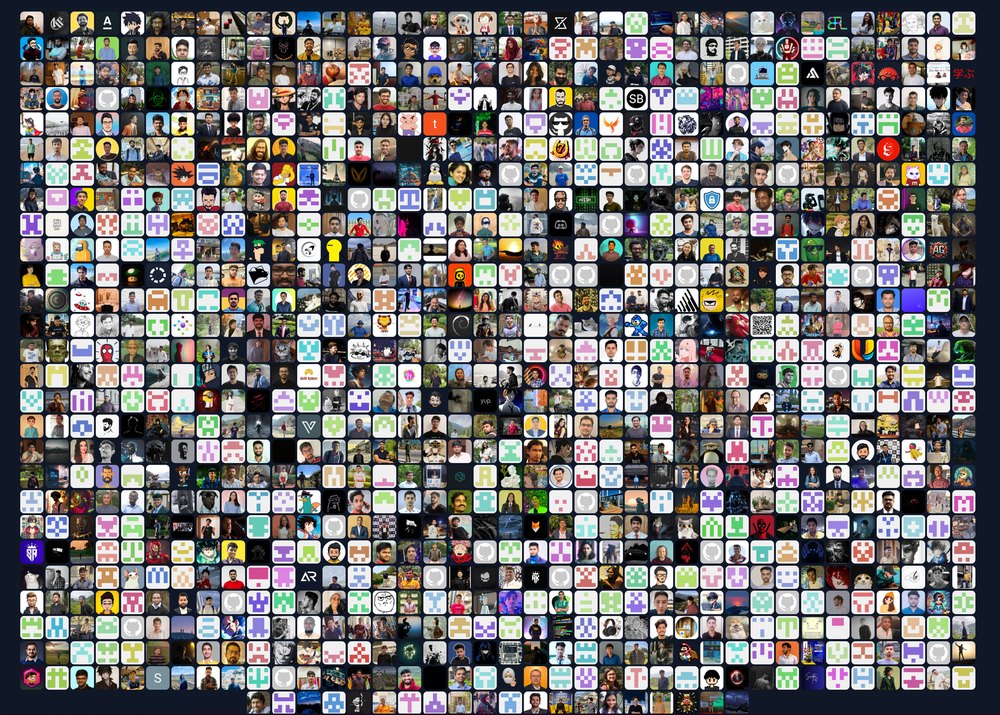
04
Repeat contributor
Counted weekly on the public leaderboard.
05
Maintainer
Owns a module, reviews others, says no when needed.
1,379+
contributors since 2020, most of them students
6,000+
community members in Slack
Contributions are public, counted and celebrated every week at contributors.ohc.network.
From Pull Requests to Patients · IndiaFOSS 2026
20 / 32
Review and release
Reviewed as if a ward will run it, released so a state can roll back.
Pull request
Automated checks
Maintainer review
develop → staging
Release
Production
Does it match the ward?
Correct in code can still be wrong on a night shift.
Does it break a state?
Eleven states run different versions, configurations and plugins.
Does it bend the data model?
A convenient field today is a migration for every deployer tomorrow.
Would a nurse understand it?
Labels and defaults are reviewed as carefully as logic.
Every release ships with
Deployer notes
Migrations for years of messy data
A rollback path
From Pull Requests to Patients · IndiaFOSS 2026
21 / 32
Security
Security expectations for health data.
Role-based access and audit logs
Who saw what, and when, is recorded for every patient record.
Consent and DPDP alignment
Access follows consent and role; the design keeps a regulator able to verify.
Scanning on every change
Code scanning and security analysis run before a maintainer reviews.
The deployer holds the keys
Self-hosting means patient data stays with the state or hospital that owns it.
In healthcare, trust is a property of the system around the code, and every contributor inherits it on day one.
From Pull Requests to Patients · IndiaFOSS 2026
22 / 32
Governance
Governance decides who can say no.
Foundation
Licence, releases, security, roadmap
Community
Contributors and maintainers build and review
Deployers
Governments, NGOs and hospitals bring requirements and money
Deployer requests compete with everyone else's, in the open.
| Decision | Who decides |
|---|---|
| Mission, legal, finance, risk | Foundation Board |
| Architecture and technical roadmap | Technical Steering Committee |
| Code review and release readiness | Maintainers |
| Plugin compatibility | Project groups and maintainers |
| Clinical workflow safety | Clinicians, maintainers, product leads |
| Security disclosure | Security maintainers and the Foundation |
From Pull Requests to Patients · IndiaFOSS 2026
23 / 32
Take home · 3 of 5
Community is core infrastructure. Budget for it the way you budget for servers.
04
Stewardship
Building a foundation for open healthcare in India, and the walls nobody warns you about.
The Foundation
An institution a government can sign with.
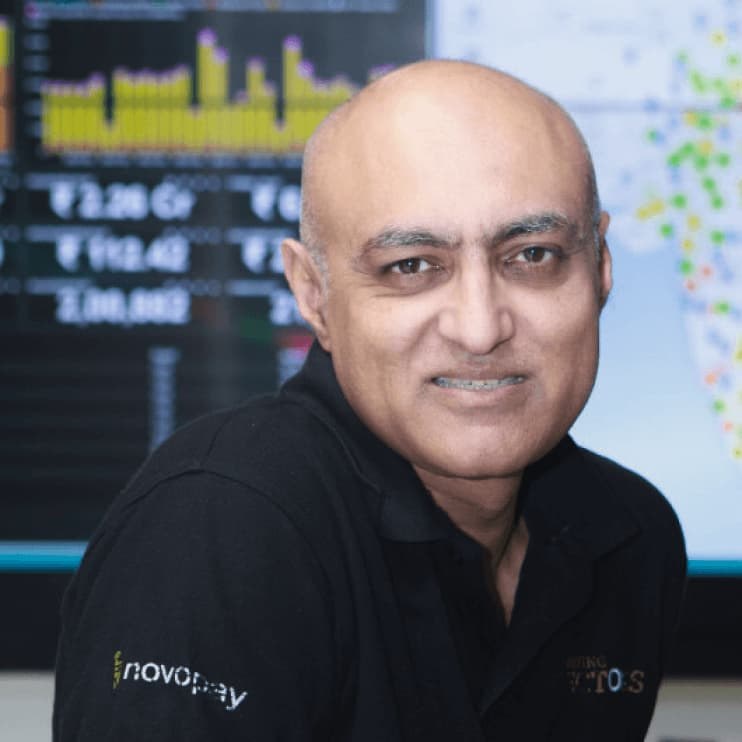
Srikanth Nadhamuni
Founding CTO, Aadhaar · Chairman, 10BedICU
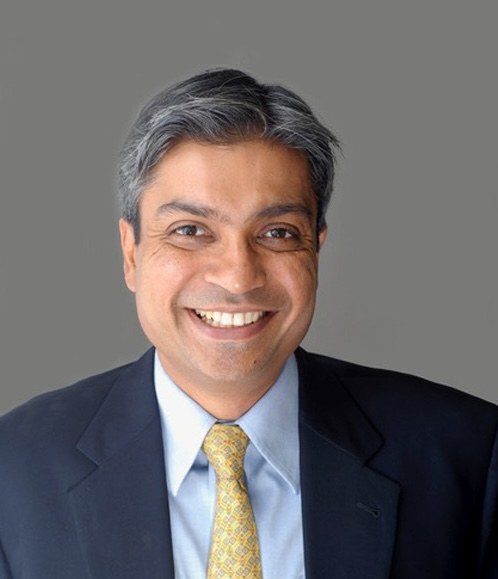
Sandeep Singal
Board Member, ACT Grants
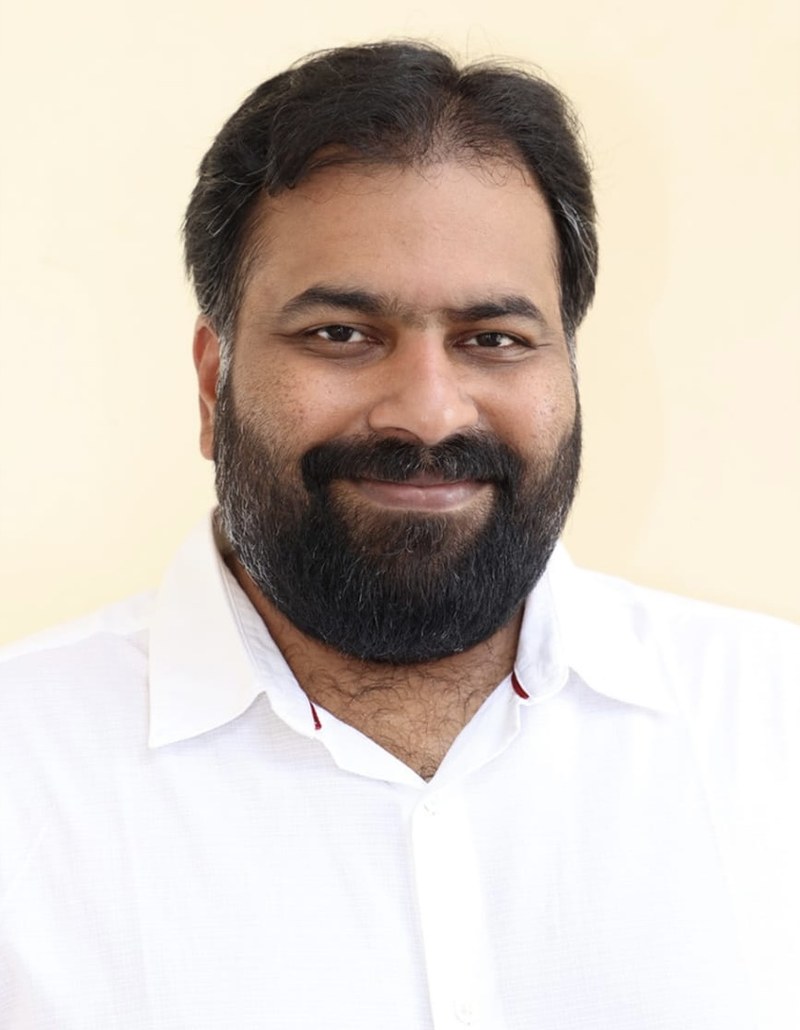
Dr Athul Joseph Manuel
Chief Medical Officer · President, IMA Kochi
BT
Bodhish Thomas
CEO · Product, AI, foundation leadership
VH
Vignesh Hari
CTO · Architecture, product and engineering
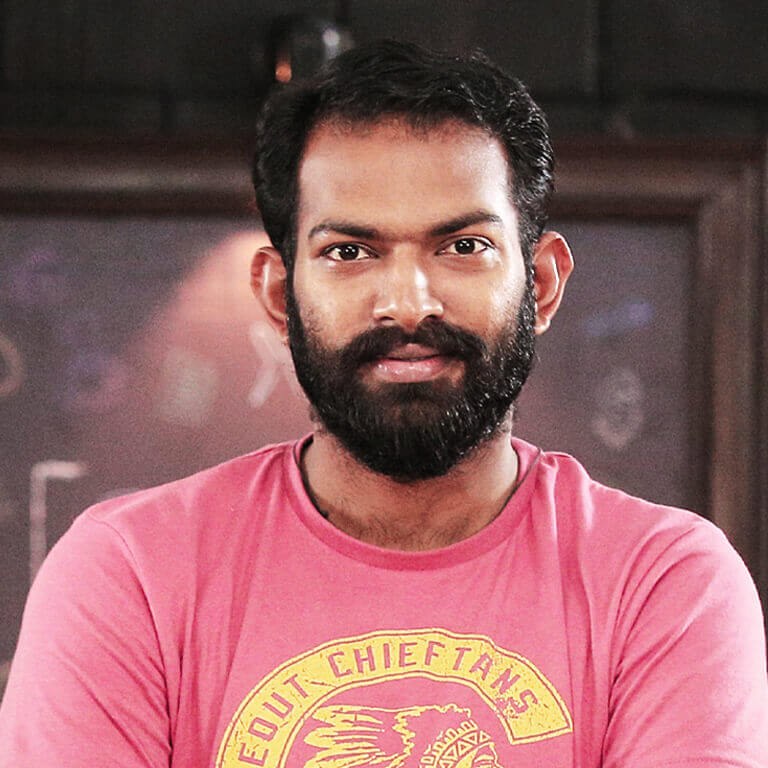
Sanjay Vijayakumar
Executive Director · Strategic operations
GC
Gigin Chandy George
CTO, eGov Healthcare
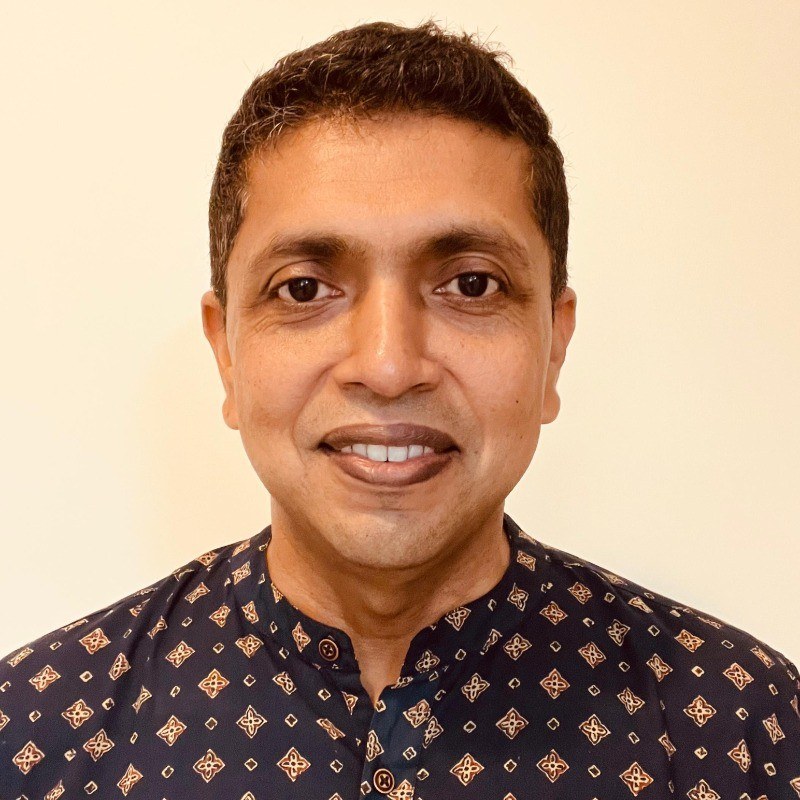
Pinaki Krishna
Resources and partnerships
Open Healthcare Network Foundation, a Section 8 not-for-profit company since December 2025. Board, technical steering committee, maintainers and project groups each own a set of decisions. 12A and 80G registered.
From Pull Requests to Patients · IndiaFOSS 2026
24 / 32
Hard truths
Three walls a new foundation hits in India.
3 years
The CSR wall
Corporate CSR money can only go to an implementing agency with 12A, 80G and a three-year track record. A foundation born in December 2025 is eligible in December 2028.
Buildings
The grant wall
Funders understand a ward, beds and equipment. The software that runs the hospital reads as overhead, and the maintainer who keeps it alive is a line item nobody wants to own.
FCRA
The foreign-money wall
Foreign contributions need FCRA registration: three years of existence and at least fifteen lakh rupees spent on core activities. Most global open-source support cannot reach an Indian nonprofit until then.
Dec 2025
incorporated
36 months on domestic goodwill
Dec 2028
CSR and FCRA eligible
From Pull Requests to Patients · IndiaFOSS 2026
25 / 32
The hard parts
What stewardship costs, every month.
Maintainers need salaries
Grants fund features. Somebody still has to fund the person who answers at 2 a.m.
Procurement assumes a vendor
Tenders are written for a company to blame. A public good needs a steward that can sign.
Every deployment wants one private feature
Saying yes once is easy. Saying yes ten times is a fork.
The bus factor
Crisis energy fades. Institutional memory has to live in the project, not in people.
The Foundation exists to carry these four, so that the community can keep building.
From Pull Requests to Patients · IndiaFOSS 2026
26 / 32
How it runs anyway
Give away the software. Charge for the rollout. Fund the maintainers from both.
Deployers pay for rollout and support
Governments and hospitals buy implementation, training and operations. Never a licence.
Programme grants fund specific work
ACT Grants, the Dell Foundation and others fund a module or programme with an end date.
Technology partners donate tooling
GitHub, Cloudflare, OpenAI, Slack, DigitalOcean and Sentry give what a company would pay for.
Members with governance rights
Institutional members fund the shared platform and get a seat at the table, not a feature.





From Pull Requests to Patients · IndiaFOSS 2026
27 / 32
Field report
What broke, and what we relearned.
01
[What broke, 1]
What happened. [one sentence]
What we relearned. [one sentence]
What changed. [one sentence]
02
[What broke, 2]
What happened. [one sentence]
What we relearned. [one sentence]
What changed. [one sentence]
03
[What broke, 3]
What happened. [one sentence]
What we relearned. [one sentence]
What changed. [one sentence]
Three failures, told in the same shape, so the room can borrow the lesson without the scar.
From Pull Requests to Patients · IndiaFOSS 2026
28 / 32
Take home · 4 of 5
Nobody funds the software that runs a hospital. Build the institution early; the rules give you three years alone.
What comes next
Identity got rails. Payments got rails. Healthcare is next.
India built national rails for identity and payments. Care delivery is still fragmented across apps, schemes, hospitals, registers and vendors, with no shared open layer underneath. A rail that is not open is a vendor.
Past
Aadhaar
National identity rails
Present
UPI
National payment rails
Next
CARE
Open healthcare rails: patients, beds, visits, referrals, medicines, intelligence, from Kerala to India to the Global South
From Pull Requests to Patients · IndiaFOSS 2026
29 / 32
Recognition
People who have built infrastructure looked at the community first.
“I had a chance to meet with the Open Healthcare Network, it's fantastic to see what they are doing.”
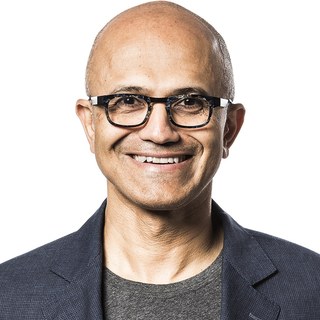
Satya Nadella
CEO, Microsoft
“The Open Healthcare Network in India is a powerful example of people coming together to advance human progress, solving the problems that matter.”

Kyle Daigle
COO, GitHub
“One of the most active open source contributor communities in India.”
Srikanth Nadhamuni
Founding CTO, Aadhaar
“Great work by 10BedICU in putting 200+ tele-ICUs in remote districts in India.”
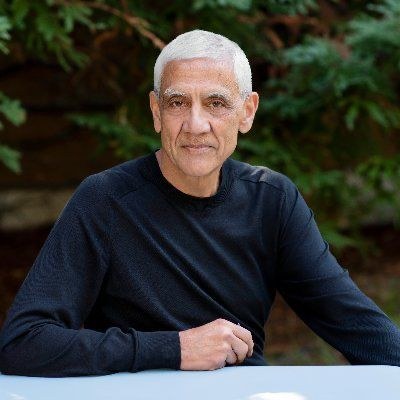
Vinod Khosla
Founder, Khosla Ventures
From Pull Requests to Patients · IndiaFOSS 2026
30 / 32
Take home
Five things to take home.
1
Open source becomes infrastructure the day a government can run it without you.
2
Build primitives, not features. A programme is configuration plus a plugin.
3
Community is core infrastructure. Budget for it the way you budget for servers.
4
Nobody funds the software that runs a hospital. Build the institution early; the rules give you three years alone.
5
Healthcare is the next rail, and a rail has to be open.
From Pull Requests to Patients · IndiaFOSS 2026
31 / 32
Join
Three ways to join.
Contribute
Pick up an issue, join the weekly leaderboard, learn the domain as you go.
github.com/ohcnetwork
contributors.ohc.network
school.ohc.network
Deploy
Run CARE for a hospital, a programme or a state, on your own infrastructure.
ohc.network
MIT licensed
Self-hostable
Steward
Fund or partner with the Foundation that keeps the project open. 80G receipts for Indian donors.
bodhish@ohc.network
ohc.network/support
From Pull Requests to Patients · IndiaFOSS 2026
32 / 32

From pull requests
to patients.
Thank you. Build open healthcare infrastructure with us.
Contact
Bodhish Thomas
bodhish@ohc.network · bodhish.in
Code and community
github.com/ohcnetwork
ohc.network · contributors.ohc.network
CARE · OPEN SOURCE · DIGITAL PUBLIC GOOD